
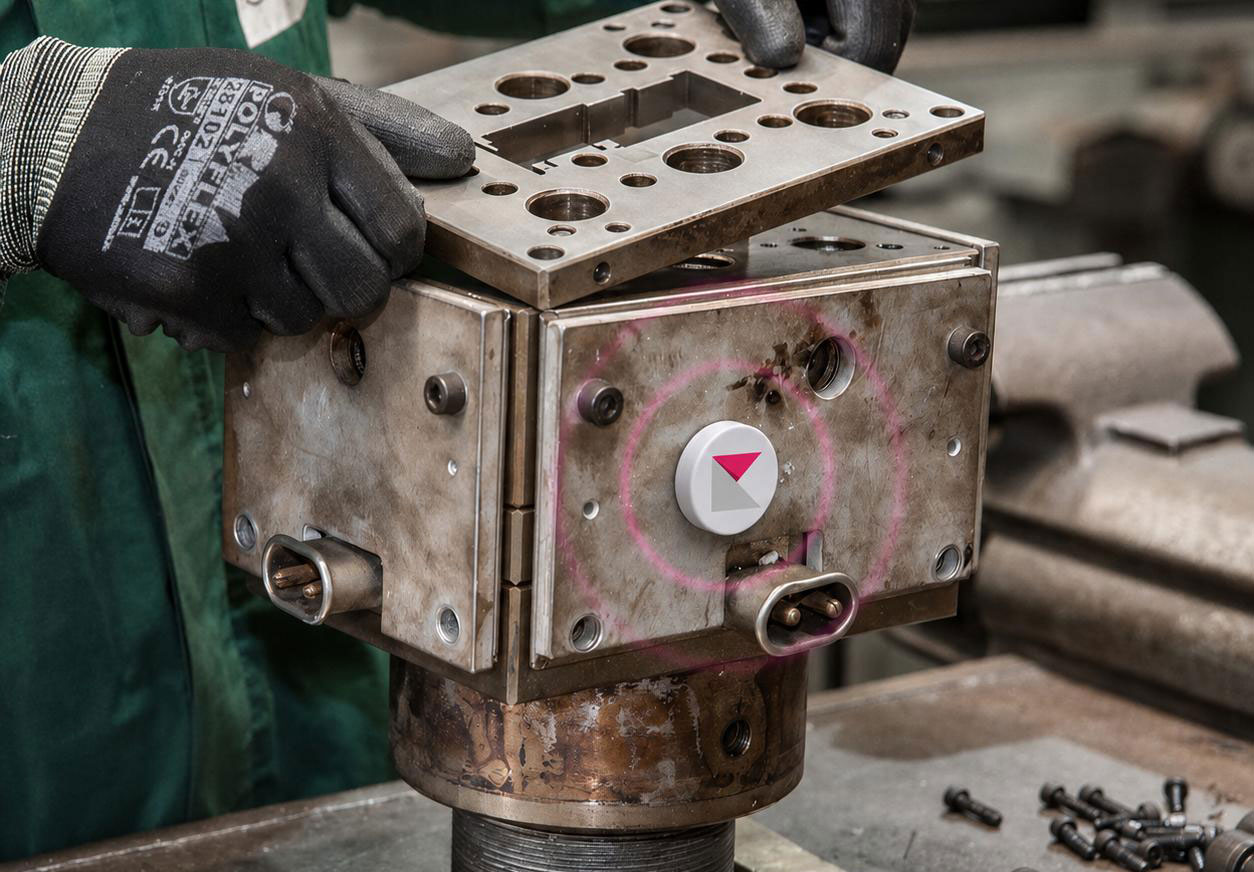
Where is the mold right now?
9 June 2026Operational guide · The molding world
For mold makers · For contract molders
At Komete we look at the molding world from two sides: those who build molds and those who use them to produce. Two different trades, two different cycles and in both cases our applications start from the same question, the one nobody on the shop floor can answer straight away.
A customer calls and asks how far along their mold is. The sales rep puts them on hold, goes down to the shop floor, looks for the supervisor, who looks for the operator. “Yesterday it was in EDM. Right now I couldn’t say.” Twenty minutes later, the answer is an approximation passed off as fact.
It happens every day. And not because the organization is lacking: it happens because a mold is a physical object that moves around the facility, and almost always it gets tracked from memory, with an Excel sheet and a few phone calls.
The mold maker’s side
Where is the mold right now?

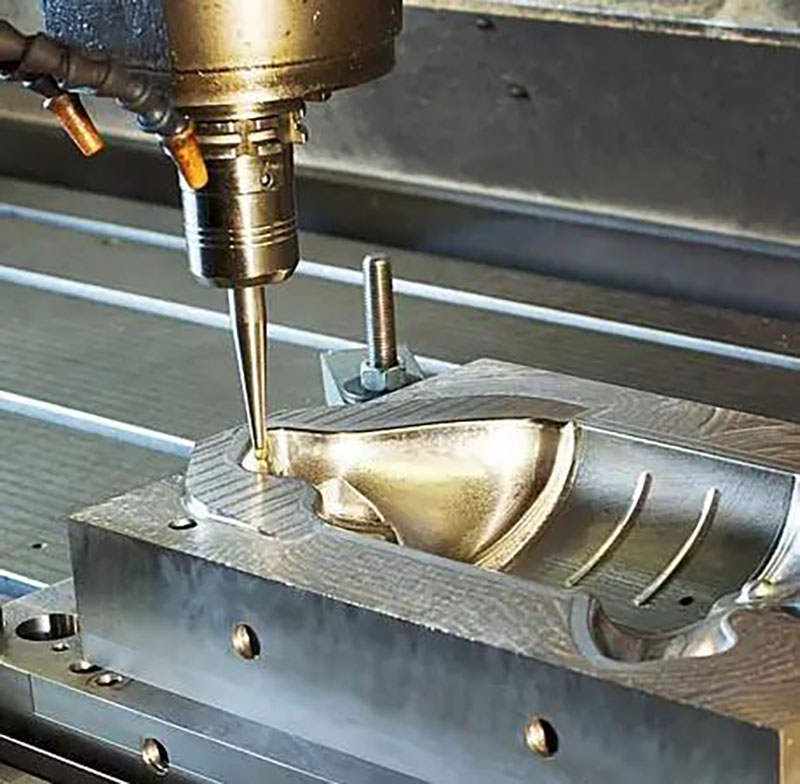
A mold doesn’t come to life at a single workstation. It moves from design to CNC, from EDM to assembly, then to the trial run, and almost always comes back for modifications. Often more than once.
Along that journey, which spans weeks, the mold changes hands dozens of times. Every handoff is a point where it can stop: waiting for an electrode, queuing in front of a machine, stalled because the trial produced a result that requires a rework. The problem is not the individual stoppage: it is that nobody sees it while it is happening. When the sales rep promises a date, they promise it without really knowing where the mold is. And the date, reliably, slips.
What changes with Komete
- The date you give the customer is based on where the mold actually is right now, not on a rough estimate.
- You see immediately where the cycle is stalling — the queue in front of a machine, the return after a trial run — and you step in before it becomes a delay.
- You stop interrupting the shop floor to ask “where are we at”: the answer is already on the screen.
The contract molder’s side
Where is it, and how much is it actually working?

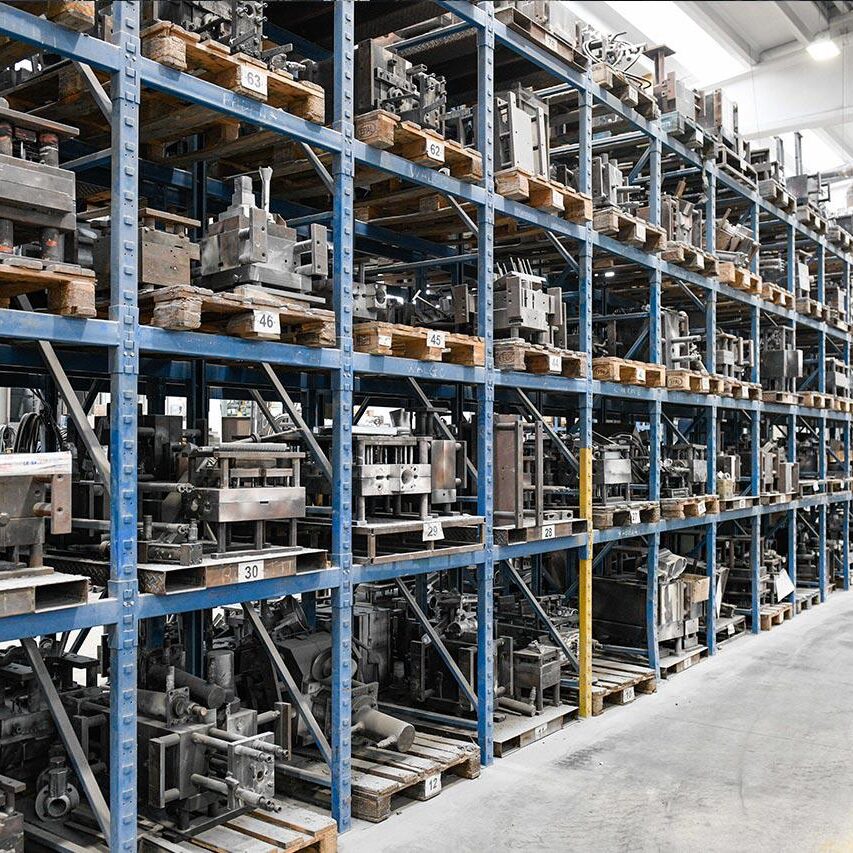
Here you don’t build the mold: you use it. And you have many of them — dozens, sometimes hundreds — on the shelves of the mold storage area.
The order comes in, and the hunt begins. Which shelf is that mold on? Is it available, or is it in maintenance? How many times have you actually used it this year, enough to justify the space it takes up? And then there is the downtime between one setup and the next: the time when the press is ready but the right mold hasn’t arrived from the storage area yet, or the previous one is still mounted. It is downtime that never shows up in any report, but gets paid for every single day.
What changes with Komete
- You find the right mold in seconds, without walking the shelves.
- You reduce downtime between setups, because the mold reaches the press when it is needed.
- You plan maintenance based on the mold’s actual usage, not the calendar: neither too early nor too late.
Two sides, one blind spot
| Mold makers | Contract molders | |
|---|---|---|
| The cycle | Design → CNC → EDM → Assembly → Trial → Modifications | Storage → Setup → Press → Downtime → Return |
| The question | Where is the mold right now? | Where is it and how much is it actually working? |
| Where time is lost | Queues between phases, returns after the trial run | Hunting for the mold, downtime between setups |
| With Komete | Real-time position, phase by phase | Storage map + actual mold usage |
| The benefit | Reliable dates, delays spotted early | Faster setups, maintenance based on actual use |
The root is the same
Building molds and molding with them are different jobs. But the blind spot is identical: the mold is physical, it moves, and it gets tracked from memory. As long as the map of where every mold is lives in the heads of the people on the shop floor and in an Excel sheet updated at the end of the day, the question “where is it right now?” will remain without an immediate answer. And every answer given late is a decision made in the dark.
See first, then decide
Komete adds a digital layer that locates every mold in real time, at every stage of the cycle, whether you are building it or using it to produce. It requires no manual declarations from operators and does not replace the systems you already use: it sits on top of them. It installs in a day.